David Langford, O.D. on December 5th, 2006 | Filed under Optoblog
I’m going to be in Denver blogging about the American Academy of Optometry meeting. I would be interested in doing some podcasts featuring interviews of other optometrists, even if you aren’t a presenter or otherwise famous eye doctor. Call me at 435 2136800 if interested.
David Langford, O.D. on November 29th, 2006 | Filed under Optoblog
Acuvue sponsored a podcast by two teenage girls named Heather and Jonelle. No optometrist should ever listen to it. It’s audience is other teenage girls who have nothing else to do except listen to strangers talk about themselves. Weird.
But the fact that Vistakon marketing did this gives me pause. It was short lived with just five episodes. At no time does Episode 5 even mention Acuvue, but I can’t say for sure since I couldn’t stand to listen to all of it. What is interesting is that they are using podcasting to market direct to consumers, specifically teenage girl consumers.
Did Acuvue marketing dept. not consider a podcast for an eyecare professional audience because eye doctors aren’t generally known to be tech savvy; therefore, eye doctors might never listen to it? I guess their reps already talk to all the eye doctors when they make their rounds, so a podcast might not be necessary for them. But I wouldn’t mind listening to some top eye doctors discuss issues relating to eyecare practice.
David Langford, O.D. on November 12th, 2006 | Filed under Optoblog
Dr. Meldrum was my evolution professor at Idaho State University, and he was interviewed on NPR. The question isn’t whether you believe in Sasquatch- it’s whether the scientific evidence points to the creature’s existence. Dr. Meldrum’s research, as I understood it from the class lectures, related to moldings taken from foot prints and the study of these casts. Dr. Meldrum says the way the foot articulates, or moves during the stride, isn’t consistent with people making fake footprints in the mud.
An interesting thing he mentions is their failure to analyze DNA from presumed hair samples of Big Foot.
The famous, grainy Patterson film of Big Foot is now over 40 years old. Surely a spoofer would have let it leek or boasted about putting one over on the rest of us.
I want to believe- er, accept the evidence; however, are there any other incidences of never before discovered mammals yet to be classified zoologically, especially in a developed country?
However, if the individual is really the spawn of Satan, he would be wily enough to avoid detection. . .
David Langford, O.D. on November 10th, 2006 | Filed under Optoblog
Books from Readers Digest and others have been around to aid non-physicians in diagnosing their condition and see whether they need to visit the doctor’s office.
Well, why pay for a book when you could just Google your symptoms and come up with a diagnosis?
UK doctors fed key terms into a Google search and a top search result contained the correct diagnosis 68% of the time.
I tried it with red, itchy, stringy discharge, and sure enough: allergy eyes.
But then I tried red, painful, light sensitive, and that contained the full spectrum of differential diagnoses. I think one would have to have a medical background to know what key terms to search for in the first place.
So, I’m still going to tell my patients that they should come in for an exam instead of just Googling. 😉
David Langford, O.D. on October 16th, 2006 | Filed under Optoblog
Drs. William D. Mathers, Frederick W. Fraunfelder, and Larry F. Rich from OHSU Ophthalmology dept. published a letter to the editor in the current issue of Archives of Ophthalmology stating that their research leads them to believe that contact lens wear is more risky than LASIK.
We here in the optometry community are calling B.S.
Arthur B. Epstein, OD, FAAO wrote the following in his recent e-mail journal Optometric Physician (Volume 6, Number 41, Monday, October 16, 2006):
Despite recent issues [regarding Fusarium], the reality is that contact lenses remain among the safest forms of correction. Soft lenses have been in use for more than 30 years.
Dr. Joseph T. Barr and the staff of Contact Lens Spectrum in their CL Today e-mail newsletter from October 15, 2006 had this to say:
Some quotes from the highly-regarded authors of the aforementioned piece include, “If one assumes,” “estimated,” “extrapolated,” “was not specified,” “calculated,” “laser surgery will become safer,” and “look forward to further investigations of these risks.” It seems much of what is concluded is based on conjecture. They also say, “the risks of refractive surgery vs. contact lenses cannot be compared directly.” Those of us who have tried to do so know this. So why do we keep trying?
I would like to add is that these OHSU doctors should probably do a peer-reviewed study instead of a letter to the editor before scaring the entire nation.
I would encourage everyone to read the entire excerpts from Dr. Barr and Dr. Epstein.
By the way, why are they still doing e-mail newsletters? Haven’t they ever heard of RSS and site feeds? Site feeds can be linked to for reference. E-mail newsletters may be hard for people to find the archives, if archives exist at all.
David Langford, O.D. on October 9th, 2006 | Filed under Optoblog
I think we all knew that it’s a bad idea to do keratometry and corneal topography after performing gonioscopy, at least if you want accurate, reliable readings. But what if you just did gonio and you now need good K readings? Now what?
A recent study took a look at how long it takes before you can reliably get a consistant K measurement after having done gonio. They found that the autokeratometer doesn’t care if the patient has had gonio or not. The Sim-K from the topographer would like you to wait 20 minutes.
I wish I had thought of this study. I could have gotten my FAAO for this. Pretty sweet and easy. The only thing I would have done different would be to add a control group that didn’t get any gonio, but still repeated AutoK and Topo just to see how much variability exists between measurements.
David Langford, O.D. on September 13th, 2006 | Filed under Optoblog
You’ve heard of “wife beater” type shirts. Well, thanks to those crazy Hollywood trend setters, we now have wife beater sun glasses. You know those humongous sunglasses that are now in style? Yes, the ones bigger than your head like these or those.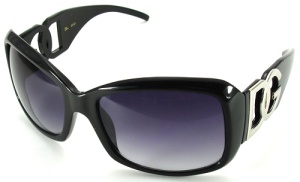
I’m not normally prone to conspiracy theories, but I’m pretty sure these became so en vogue because they’re perfect for the battered wife to wear after a hard night at home. Instead of people encouraging her to get help, they just won’t know! I think it’s somewhere in the Bible that “[Elephant-sized sunglasses] cover a multitude of [husband’s] sins.”
So I guess it won’t be long before we’re all wearing jumbo sunglasses for style instead of a joke.

David Langford, O.D. on July 23rd, 2006 | Filed under Optoblog
I’ve mentioned the Family Health Radio podcasts before. They had another eye-related podcast the other day about computer vision issues.
Again, I’m pleased that they respect optometry by saying “see your eye doctor.”
David Langford, O.D. on July 12th, 2006 | Filed under Optoblog
Well, another multi-million dollar settlement against a LASIK surgeon. This time it’s against an awarded TLC ophthalmologist.
TLC isn’t one of those Sunday comic laser centers. And I don’t think an eye doctor managing a pre-op LASIK patient would just miss a keratoconus problem since computer-assisted analyzation of cornea topographical maps helps catch almost all of those. And if a 9 page informed consent document, a video, and doctor counseling doesn’t count for anything, then maybe the only criteria is whether or not the individual likes their outcome.
Anyone for LASIK surgery?
David Langford, O.D. on June 22nd, 2006 | Filed under Optoblog
Hairstylists and eye doctors have a few things in common. There are independent and chain salons. Some charge more than others and quality can differ widely between low end and high end salons. Beauty shops provide services and also sell products related to their services. To contrast, of course becoming an eye doctor has a lot more schooling, and nobody ever died or went bald because their hairstylist didn’t perform adequately (right?) But what really sticks out to me is that there is no Haircut Insurance.
Little old ladies sometimes get their hair done on a weekly or bi-weekly basis. I can’t imagine what their budget must be for their hair care, and yet some people aren’t willing to invest in their eyes once a year!
I’ll bet the next big idea in the insurance industry is going to be Hair Insurance. You see, everyone needs a haircut, but not everyone actually gets a haircut, so that is the theory behind vision and haircut insurance. Yup, the hair stylists are going to have to suffer like the rest of us eye doctors. Actually, everyone will suffer, but first let me tell you how the insurance agents would sell hair insurance.
For a very affordable monthly premium, each hair-insured individual will get:
- A routine haircut on a monthly basis (with a co-pay), and when utilizing a participating salon, any additional haircuts will be 50% off (plus the co-pay).
- Any “extras” like coloring, bleaching, perming, etc will be contracted with participating salons to offer you these services at a 40% discount.
- A “Nail Care” rider can be added to your policy for a modest premium increase.
- Each policy will have a “product benefit” that allows them to get certain brands of shampoo, gel, etc. every other month (additional products may be purchased more frequently from participating salon for 30% off the retail price.
- For low risk individuals, baldness protection insurance can only be obtained by an in-person interview with the insured, both parents, and both sets of grandparents, and a blood test. High risk individuals can get follicle transplant surgery at a participating provider for an amazing discount.
Here is what the hair insurance companies will tell the stylists:
- If you become a participating salon, we will drive a lot of traffic to your door.
- We will reimburse you for half your usual fees, but you still get the co-pays and plus all this traffic we’re going to drive to your door, and sometimes people get their hair cut more than just once a month and you can collect up to 60% of your usual fees for any haircuts more than the benefit.
- You won’t make any money from the reimbursement on the first sale of shampoo, gel, etc, but since we are driving so many people to your door you can up-sell lots of people to additional premium products but only at 65% of your retail price.
- Since we are an insurance company, you will have to start keeping detailed records of every haircare encounter. If you do not keep the records exactly the way we want (and we are not allowed to tell you how we want them), then we have the right to refuse payment and fine you until you go bankrupt.
- If a client complains about a lowsy haircut, we will withdraw payment for services rendered until dispute mediation has occurred.
- If you do not send in the hair cut insurance claim forms with the proper procedure and billing codes, then you will not be reimbursed. If you call and ask why your procedure and billing codes were incorrect, we will tell you that by law we are not allowed to suggest the proper codes. If you try submitting random codes in the hope that you’ll find one we accept, then we’ll make sure you go to jail. We will not notify you for at least 30 days when we receive an incorrectly submitted claim form. We will not reimburse for properly submitted claim forms if they are received more than 30 days after the date of service.
Now here is what will happen to the market when haircut insurance becomes available:
- Clients will be forced to sign a paper before their haircut stating they will not sue if they think they get a bad haircut. Any dispute will be handled by 3rd party mediation.
- Hair care product cost and haircut fees will immediately double (and justifiably so because reimbursement is so poor and now they have to keep detailed electronic records of each haircut (client c/o hair being too long; wants to know if receding hairline and thinning crown area are good candidates for FRS [follicle replacement surgery]. Client desires “his usual #1 fade.” From previous notes I reminded him that he usually gets a #2 fade. He still persisted about wanting a #1, so after he signed the waiver, I proceeded with a #1 fade. I left areas around the crown slightly longer to compensate for thinning. I suggested combing forward to help with the crown. Advised against certain OTC hair re-growth Tx since they can lead to complications. I will refer him to the FRS specialist for consult. Co-pay is $10 and balance billed to Hair Insurance.)
- Most big box salons will not be allowed to be participating salons, so they will undercut everyone’s prices to attract those without hair insurance.
- Most people will just go to whatever salon that accepts their haircut insurance, but the salons that do accept it will go out of business because the insurance company rules are confusing so they never get paid.
- The salons that accept insurance and stay in business specialize in coloring, perming, and bleaching because that’s the only way they can turn a profit while still accepting insurance.
- Little old ladies will now only get their hair done once a month “because that’s all my insurance covers.”
- Most men will have flakes in their hair from the gel they use, but they’ll put up with it “because that’s the gel my insurance covers.”
- Most women will have dry, damaged hair because their shampoo and conditioner combination is cheap, but they’ll use it because “it would have cost more to upgrade to the good stuff. I don’t want to waste the insurance benefit for which I pay all those premiums.”
- Most people will go around with a bad haircut.
- Hair follicle replacement surgery will be advertised in the funny pages.
- Upscale salons won’t accept haircut insurance, and they will be the only ones that thrive because they center their business about the quality of their work, their salon environment, and their excellent service.


 Denver AAO 2006