web analytics

Doctor Daycare

on August 2nd, 2008 | Filed under Comics, Optoblog

What is the CPT Code for daycare?

Now, I don’t want you to get the wrong idea. I love kids. I have three young ones myself. I don’t even mind if patients bring their kids with them. We do that all the time. I don’t even mind if the kids are somewhat disruptive, like speaking out of turn, constantly asking questions, or even running around. It’s all good.

I was just speculating on what would happen if the kids where heck-bent on destroying stuff or if the parent decided not to manage inappropriate behavior at all and let them run around the office unsupervised. Then I thought it would be funny to put it in a cartoon. So don’t be upset. It’s comedy.

Bye the way, does anyone know the CPT Code for daycare?

Tags: , ,

2 Comments

Join the USPHS as an Optometrist

on July 24th, 2008 | Filed under Optoblog

2017-12-12 update:
This post is way out of date. In the wisdom of the government, the USPHS is apparently trying to be more military-like. One of the sequelae of this movement is that hardly anyone makes it to O-6 anymore- especially not some optometrist who often works alone, supervising one tech/receptionist. Even the Pharmacy Dept Supervisor, who supervises 3-4 other pharmacists plus 4-6 techs, is typically only given an O-5 billet! RIDICULOUS if you ask me.
So any calculations below from 2008 showing what great pay and retirement you’re going to get, heavily based on the idea that anyone who puts in the time will get an O-6 by the end of their career, are just plain wrong now. Those glory days are gone- sailed away with the salt-and-pepper uniform. I was going to delete the entire post, but I’ll leave it for posterity’s sake.

I worked for the USPHS, detailed to the IHS, for 2 years. I would have stayed longer, but I wanted to live in Utah or Idaho. The positions available in these two states were filled with young optometrists that appeared to me like they weren’t going to move away anytime soon, so I made my move to go into private practice and then later into Wal-Mart practice.

Commissioned Corps logo

Looking back on my decision to leave, it would have been much better for my financial situation to stay. In fact, I am going to argue that for any optometrist, the financial rewards for practicing optometry are equal to and most likely better in the Commissioned Corps than in the private sector.

Government optometry work seems to get little attention in optometry school. Most everyone has delusions of grandeur about how comfortable their living will be while working in private practice. Of course, that dream turns into a nightmare when they work for another optometrist paying them little more than a resident but with the hint or promise of a buy in which later fizzles out.

Many people think of government optometry only when they want to go into the military just to get their school loans paid off and then get out. Many do not stay because promotion in the military is limited. Many years ago the USPHS used to have an automatic promotion schedule, but that has been replaced by merit promotions. A recent transformation of the commissioned corps of the USPHS has made it harder to get promoted just for showing up; however, your chances of getting promoted to O-6 (equivalent to a Colonel or a Navy Captain) are much better in the USPHS than other uniformed services.

For an estimate of what monetary compensation you might get in the USPHS, I’ve made this table. It’s a little tough to understand unless you are used to military pay systems. They have what is called base pay which is calculated from your rank and years of service. But then other types of pay like Housing Allowance and Subsistence which are variable depending on where you live. You also get pay for being an optometrist: Optometrist Special Pay and Optometrist Retention Pay which helps equal your pay to private sector optometrists. You can get even more money by getting your FAAO and by hopefully getting loan repayment. Also you get up to $1000 reimbursement per year for travel and tuition expenses for continuing education.

Join the fight for public health - U.S. Public Health Service Commissioned Corps

My PHS pay estimate is based on a theoretical advancement in rank. Promotion is not guaranteed nor is it on a set timetable. There has been cases where an officer was frozen at O-5 and wasn’t allowed to be promoted to O-6. I also assume that one stays 30 years in the corps. You can get out as soon as 20 years, but your retirement compensation is less.

Now, I’m no accountant or financial planner, but I believe that my PHS pay estimate table shows that compensation inside PHS is probably better than what you can expect to achieve in the private sector as an optometrist. A private sector optometrist would have to invest ~$24,000 a year just to get the same retirement that a 30-year PHS optometrist gets.

Anyway, this should dispel the myth that PHS optometry pay isn’t comparable to private or commercial optometrist pay. I’d say it’s better based on my calculations.

Now, what can you expect if your join the USPHS? There are a small few who work in the FDA and Bureau of Prisons. You could also work your way up and do non-clinical duties at USPHS headquarters. But the majority of PHS optometrists work in the Indian Health Service. You can work in the IHS as a civil servant or direct tribal hire, but for a career IHS optometrist it is most advantageous to go the commissioned corps route. Same job as an optometrist but different pay system.

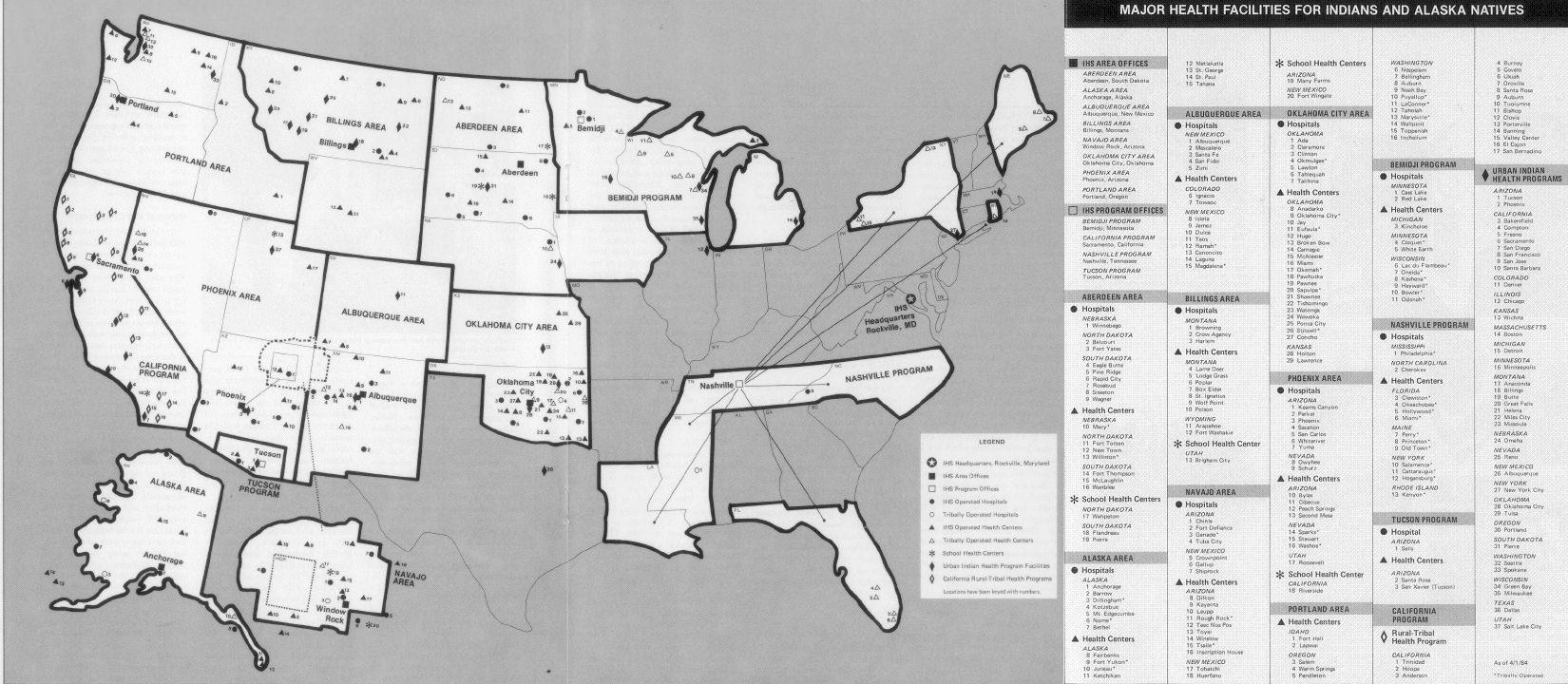
Where can you work? Well, here is a map.Old map of IHS locations
But a better way is to browse through the PHS-IHS directory regularly updated here. But not every place has an opening, so you need to look at the current Vacancy Announcement (a.k.a. Recruitment Announcement) regularly updated here at the IHS Optometry web page.

You can find optometry job announcements in IHS by going to their website job page and then selecting “Optometrist” in the Professional Categories pick list. I find that this page isn’t updated as quickly as the IHS optometry page, though.

In my next few posts, I’ll talk about non-monetary benefits of working for PHS-IHS, tips and tricks for applying with the PHS-IHS, more about rank advancement, and the Loan Repayment Program.

For more information about calculating pay in the USPHS system, see these sites:

Tags: ,

5 Comments

Best Days to Practice Optometry

on July 19th, 2008 | Filed under Optoblog

Since starting my practice inside a Wal-Mart Vision Center, I’ve kept track on a spreadsheet the daily gross and the number of exams. I also track a few other items like glasses vs. contacts vs. medical visits, DNKAs, follow-ups, walk ins, and appointments scheduled.

I thought it might be nice to share with you all a pattern I’ve noticed about which days are better to work than others, listed best to worst.

2008 so far (January to April I worked Mon 10-7, Wed 10-7, Friday 10-7, and Saturday 9-5, and May to present I worked 5 days a week, Tues 9-6, Wed 10-7, Thursday 10-7, Friday 9-5, Sat 9-3):

  1. Tuesday
  2. Wednesday
  3. Saturday
  4. Monday
  5. Friday
  6. Thursday

2007 from April to December I worked four days a week (Monday 10-7, Wednesday 10-7, Friday 10-7, and Saturday 9-5):

  1. Wednesday
  2. Monday
  3. Friday
  4. Saturday

In 2007 Mon, Fri, and Saturday were almost identicle in revenue earnings, but Wednesday gross averaged $98 more than the other days. In 2008 so far Tuesday and Wednesday (TuW) are close and so are Saturday and Monday (SaM). TuW gross averages $71 more than SaM, and SaM averages $79 more than Thursday.

In 2007 my private practice appointment book would fill up fast on Tuesdays and not so much on Thursdays. At the Wal-Mart, they told me I’d missed quite a few walk-in opportunities on Tuesdays, but not many on Thursdays.

Anyway, my take home message is this:

  • I advise O.D.s looking for fill-in work to stay away from Thursdays and Fridays and try to get in on the action for Tuesday and Wednesday. (Conversely, if you are an optometrist looking to hire fill-in work, then switch what I just said.)
  • If you need to take a random day off, Thursday or Friday is a safe bet

Your mileage may vary. For instance, from what I’ve heard, everywhere else in my district (Salt Lake to Ogden area) is gangbusters on Saturdays. I think that in my Northern Utah town the people like to go play on Saturdays and not worry about having to spend time at the doctor’s office. We notice that Saturdays are better in the winter than the summer because our area has lots of good hiking, boating, and other summer fun activities nearby.

Tags: , ,

2 Comments

Start Your Own Eye Doctor Blog

on July 11th, 2008 | Filed under Optoblog

I’m a little disappointed that more eye doctors aren’t blogging yet. It has been around since ~2001, and blogging went mainstream in 2004.

To try to make it easy for an optometrist or ophthalmologist to get started blogging, I created eyedoctorblogs.com. Go on over and sign up and let’s give feedback to each other and the industry.

eyedoctorblogs.com logo

Be sure to read the About page and the Terms of Service.

Tags: ,

Comments Off on Start Your Own Eye Doctor Blog

Super Glue Eye Drops

on July 7th, 2008 | Filed under Optoblog

This physician had an interesting case about a patient who put super glue in her eye by mistake,and then he used Colace, scissors, cotton-tip applicators, and a hemostat to solve the problem.

Hat tip to Kevin, M.D.

Would any of you reassure the patient and patch the eye for a couple days while it works itself loose? I mean, as long as the patient doesn’t need to use that eye for a couple days? Of course, I think what the ER doctor did is the best approach, but what CPT code could you use besides foreign body removal?

Tags:

Comments Off on Super Glue Eye Drops

Favorite Summer Grilling Recipe

on July 1st, 2008 | Filed under Asides

I’ll go a little off topic today. In the summer I like to grill as often as possible. I thought I would share my favorite grilled chicken recipe:

Use frozen chicken breast and marinate for 4-5 hours at room temperature in a Ziplock bag using McCormick’s Grill Mates Southwest Marinade.
Grill on low heat for about 10-15 minutes per side.
Near the end, apply Kraft’s Honey Barbecue Sauce and then previously cooked bacon (or deli-sliced hickory smoked ham will do if you don’t have the time to fry up the bacon).
After another minute, apply Tillamook or Cache Valley colby jack cheese on the top, let melt, and then serve.

Voila’. Bon Appetit.

It’s similar to something I’ve had at Chili’s.

Tags:

Comments Off on Favorite Summer Grilling Recipe

A Voice of Experience

on June 30th, 2008 | Filed under Optoblog

I keep hearing this type of comment: “I don’t understand you. I’ve read your blog when you were in private practice versus now. I don’t think you know what you want out of life.”

They seem to be saying that I’m a flip flopper and must be some unhappy individual who is lost. You can’t discredit me because I’ve experienced three major forms of practice. Someone who has experienced government, private, and various flavors of commercial is not a lost soul, but rather he is an experienced voice.

I implore all students and new O.D.s to listen to my words. If you would like the security of government work and don’t mind living in remote locations, then by all means be a government optometrist. If you want to be able to live in more populated areas, than choose commercial practice over private and choose Wal-Mart over all other commercial options.

In my previous posts advocating private practice and demonizing commercial, I had been drinking the private practice cool-aid that I’d been served since optometry school. Some of the disparaging remarks against commercial hold true for many brands of opticals, but not Wal-Mart.

Private practice is too risky. Sure, you know or have at least heard about successful private practice businesses, but you can’t assume that things would go well for you if you were to hang up a shingle. The money it takes now days to start cold could be better invested in Vegas. It’s a crapshoot, heavy on the crap because the frame vendors, the lens suppliers, ophthalmic equipment companies, the financing company, the advertising people, the landlords, the employees and more all get their money from you. But when do you get paid? Paying all of those people doesn’t automatically bring patients in the door. And when will you actually get enough patients to break even? That could be never, you know. You may just have to close shop when the money dries up, like I did.

Wal-Mart makes it risk free. There will always be patients coming to your door. Your success is only limited by the number of hours you are willing to work. That’s why if you want to be rich, make and sell widgets. If you want to do eyecare, work for the government or Wal-Mart, depending on where you want to live.

Anyway, just because I’m giving advice from my experience doesn’t mean I’m somehow lost or unhappy. I have family, religion, and a great job inside a Wal-Mart Vision Center. Of course I’m happy.

Tags: , , , ,

2 Comments

Multi-location Contracts are a Bad Idea

on June 20th, 2008 | Filed under Optoblog

Here is the scenario. One doctor can own a Wal-Mart contract (or a Sam’s Club contract for that manner) for more than one location at the same time. Wal-Mart usually decides to do this if the locations are struggling with volume and/or having a hard time finding someone to fill the location.

Can the doctor physically be at two places at once or work eight days a week? No, so he hires someone. Let’s call the multi-contract owner Dr. Fingers and the two doctors who work for the contract owner we’ll call Drs. Desperate and Disgruntled. Wal-Mart needs three locations filled: Bountiful, Ghetto, and Rough Diamond.

So let’s say Dr. Fingers works Bountiful and hires Dr. Desperate at the Ghetto location and Dr. Disgruntled at Rough Diamond. The contract is similar to “I’ll pay you 70% of your gross receipts.” Dr. Desperate says fine because she just needs a job and doesn’t care about a long term commitment because she’s willing to relocate in a moments notice. Dr. Disgruntled is in a bind because he really wants to live in the city of Rough Diamond forever, but he doesn’t want to pay Dr. Fingers 30% of his gross receipts, especially when he finds out that Dr. Fingers is only paying Wal-Mart 10% or if the contract is some ridiculously low flat fee not even based on receipts.

So what happens? Usually Dr. Disgruntled will leave and try to find his next best ideal location. Dr. Fingers will probably have to funnel in and out doctors every couple years. The vision centers stagnate and never grow because the doctors who work there have no vested interest in growing the practice since they know they won’t be there long term since Dr. Fingers takes so much of their money.

I believe that it is a mistake for Wal-Mart to give any doctor a contract for more than one location just so he can suck cash from other doctors for no reason other than, “Hey, I own the contract.”

Now, I can see how some of you might say, “But what if you had a multi-doctor parnership share multiple locations equitably?” Well, you’d still have the problem of the last location not growing because the doctors rotate every day, and then which of the doctor partners would volunteer to work at the last location on its poor performing days?

It’s better for the vision centers, the doctors, and even the community to have each doctor own the contract for the vision center that they work in.

“But what about vacation days?” you say. Well, wouldn’t it be cool if each area could have it own full time fill-in person? Maybe the fill in person could always keep 100% of his receipts and not have to pay rent to subsidize the days when there isn’t an opportunity to work? I don’t know, I’m just thinking out loud here. Or you can probably find a private practice doctor who needs supplemental income to work for you. 😉

“But our store needs someone, and we can’t find anyone, so thank Heaven for Dr. Fingers,” you say. Well, that’s a short term solution that defeats you in the long run. None of your sub-contracted doctors would be motivated to grow the practice (an thus increase vision center sales) like a contracted doctor would. This scenario will just stagnate you at mediocrity. If you must hire Doctor Fingers, I think the terms should explicitly say that Wal-Mart has the option to not renew Dr. Fingers contract at the satellite location if they can find a permanent doctor when the contract expires in three years. I don’t care if Dr. Fingers is taking a “risk.” He has three years to recoup his “risk.” Take it or leave it, Fingers.

But let me restate. Multi-location contracts for a lone doctor who invariably gets greedy and pockets cash for not doing any work: BAD. Allowing a doctor to own the contract where he actually works in order to change it from slow to crazy-busy: GOOD.

Tags: , ,

1 Comment

Useless Optometrist

on June 11th, 2008 | Filed under Optoblog

Ouch. This hurts.
It makes me want to cry. 😉
But seriously, didn’t I say that optometrists have a PR problem? Sure, you could argue the cartoon itself is fun and games, but the reader comments about it are not.

Tags: , ,

Comments Off on Useless Optometrist

Dr. Rowley in the News

on June 8th, 2008 | Filed under Optoblog

Brian Rowley was in the class above me in optometry school, and I just saw him at the UOA Meeting. It seems he is in the newspaper as a karmic baseball fan.

He also was interviewed for KSL TV, and they showed it on SportsBeat Sunday which you can view completely here on their SportsBeat iCast. On Saturday they showed this teaser:

I’d say that’s a pretty good practice builder for an up and coming optometrist. At the Park City meeting, he told me that his practice will soon need a new building with more exam lanes. Dr. Rowley had to work commercial optometry for a while before taking over his current thriving practice. So you see, optometry students, it is possible to make a successful solo private practice…if you are willing to roll the dice, take the gamble, spin the wheel, bet the farm, etc.

Tags: ,

Comments Off on Dr. Rowley in the News